
Real Estate
You step off the sun-bleached asphalt of a winding lane in the Hollywood Hills, where the midday glare flattens every ridge and canyon into stark contrast. The city below is kinetic and relentless, a haze of movement humming between the basin and the sea. Then, the heavy front door swings shut behind you. The outside world does not merely quiet down; it ceases to exist. The air cools instantly. The light, once blinding, filters down to a soft, amber wash across wide floorboards. Your shoulders drop. You inhale.
Six months later, when the paperwork is archived and the moving boxes are long recycled, you will not recall whether that primary bedroom was four hundred square feet or five hundred. You will not remember the precise linear footage of closet hanging space, nor will you cite the exact ceiling height in the guest bath. What remains etched in memory is that single, physical intake of breath at the threshold.
The Vanishing Inventory of Dimensions
Real estate transactions are customarily conducted in the language of arithmetic. Buyers begin their search armed with parameters: minimum square footage, lot size, bedroom count, and parking ratios. Spreadsheets are built to track price per square foot across neighborhoods from Los Feliz to Pasadena. On paper, these metrics offer the comfort of empirical logic. They provide an objective scaffolding for what is, at its core, a deeply intuitive choice.
Yet memory is an indifferent bookkeeper. Within weeks of viewing a series of homes, the numerical data begins to blur. The rational mind assumes it is evaluating an asset based on volume and capacity, but human perception does not measure a sanctuary in cubic feet. We do not experience shelter as a set of boundaries drawn on an architectural blueprint. We experience it as a continuous emotional state.
What the mind retains is not the boundary of the room, but the quality of life that room seemed to promise. Square footage is simply the envelope. What fills it is what stays.
The Gravity of Natural Light
Long after an open house, the clearest memory is almost always of light. It is rarely the presence of generic brightness that leaves a mark; rather, it is how light moves across a particular surface at a specific hour.
Buyers remember the sudden warmth of morning sun catching a breakfast banquette, or the way an eastern exposure illuminated a garden wall through a steel-framed window. They remember the deep, restful shade of a living room protected by deep eaves during an August heatwave. Light is atmospheric timekeeping. When a home is oriented with intention, natural illumination does not merely show a room—it animates it.
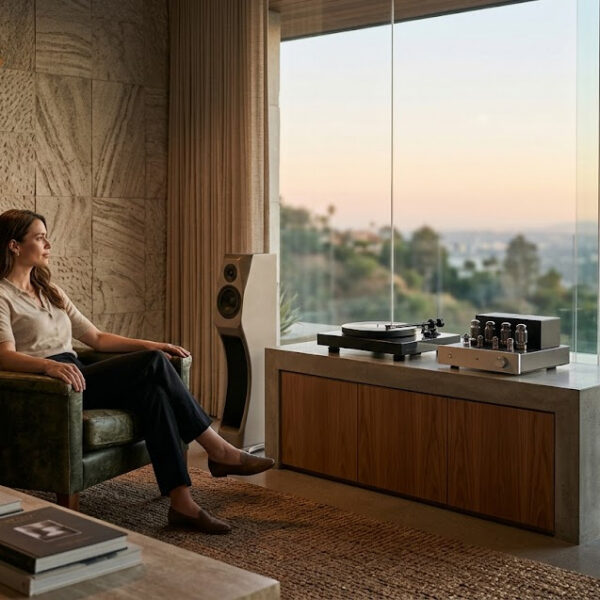
A well-sited residence choreographs the passage of the day. In the hills above Silver Lake, where homes cling to steep topography, the difference between an ordinary property and an exceptional one often comes down to how effortlessly the architecture gathers the twilight. People remember where they imagined themselves sitting at dusk with a glass of wine, watching the ridgelines turn indigo. That image outlasts any memory of the kitchen island’s square dimensions.
The Acoustic Texture of Stillness
We rarely talk about what a home sounds like, yet auditory memory is remarkably persistent. In a dense metropolis, silence is the rarest and most restorative luxury of all.
When buyers look back on a showing that captivated them, they frequently mention how quiet the house felt. They may not know the engineering that created that serenity—the solid-core interior doors, the acoustic insulation between floors, the double-glazed low-emissivity glass that buffers street noise. What they recall is the visceral sensation of stepping into an acoustic haven.
Equally memorable is sound that belongs: the distant trickle of an interior courtyard fountain, the soft click of an unlacquered brass latch falling into place, or the muffled resonance of footsteps across dense, reclaimed timber. A house with poor acoustics feels restless, amplifying every echo and rattling with the rumble of passing traffic. A considered home absorbs tension. It invites quietude, and that quietude lingers in the nervous system long after the tour ends.
Sightlines and the Feeling of Ease
Square footage creates volume, but sightlines create freedom. A modest footprint with unbroken, thoughtfully aligned views can feel infinitely more expansive than a cavernous floor plan segmented into dark, purpose-built chambers.
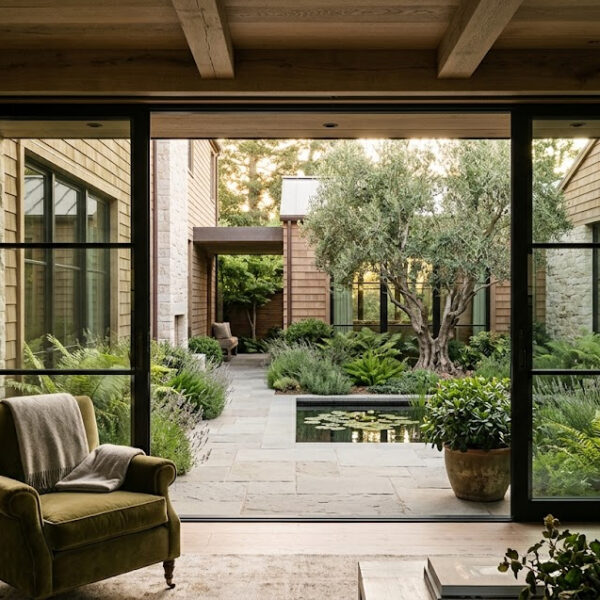
Consider how a space unfolds as you walk through it. Does the entry pull your eye toward an interior garden, or does it dead-end into a blank wall? Do the transitions between rooms feel natural and unhurried? When buyers remember feeling at ease in a property, they are often responding to the subconscious harmony of proportional sightlines.
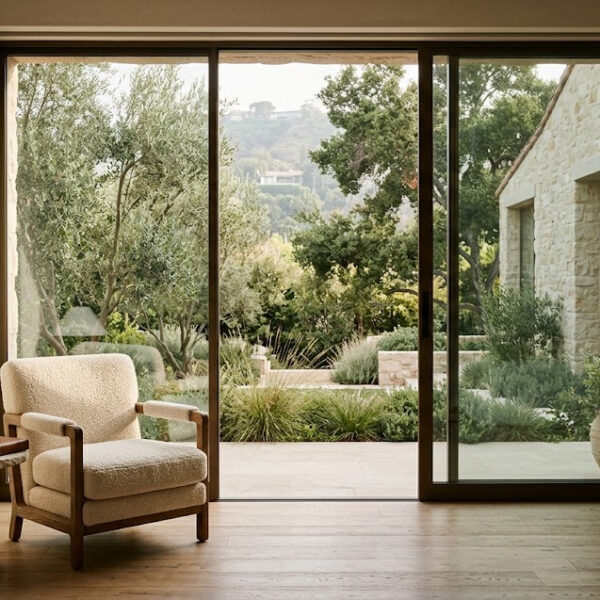
In mid-century post-and-beam architecture, this principle is foundational. The physical square footage of these homes is often relatively compact by contemporary standards, yet they never feel confined. The eye travels through floor-to-ceiling glass to the garden, past the overhang to the tree line, borrowing the landscape to expand the interior experience. Months later, buyers describe these homes not as small, but as generous, because the architecture gave their gaze room to wander.
Tactile Honesty and Grounding Materials
Memory is surprisingly tactile. During a showing, hands reach out instinctively. People run their palms across kitchen surfaces, trace the grain of a stair rail, and touch the cool face of an exposed plaster wall. These physical encounters form an indelible impression.
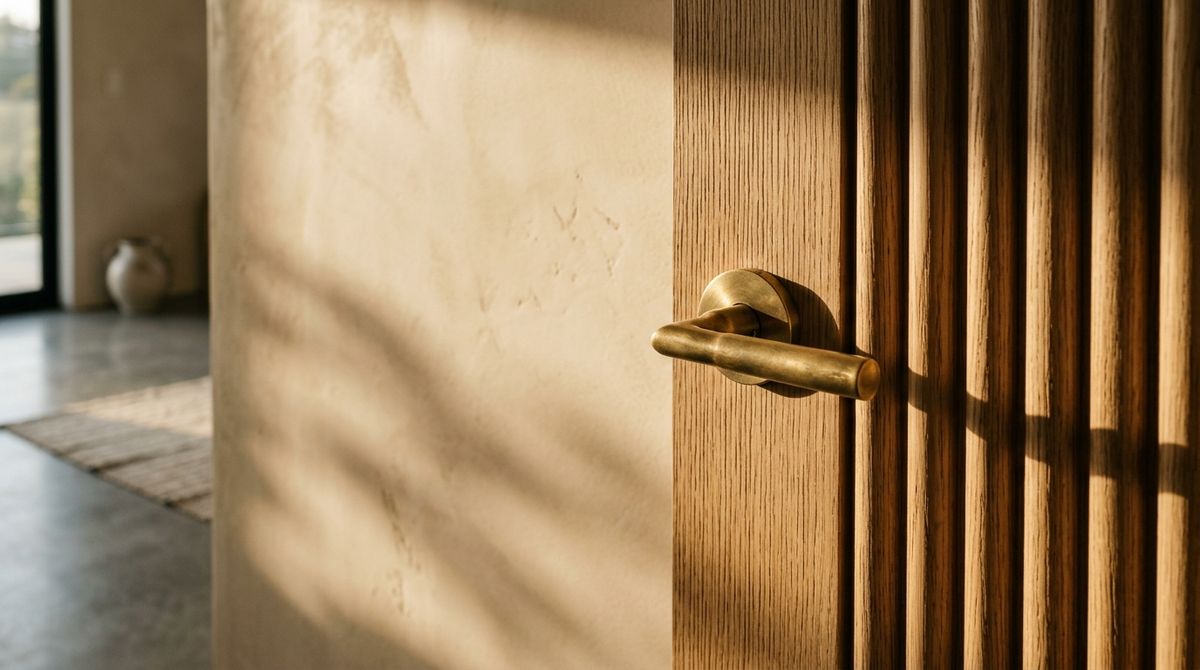
Synthetic finishes, engineered veneers, and mass-market fixtures may photograph well on a screen, but they leave the body cold. In contrast, authentic materials possess a tactile gravity. The cool, honed surface of unsealed limestone, the subtle irregularities of hand-troweled lime wash, the reassuring weight of forged bronze hardware—these elements communicate permanence.
Authentic materials ground us. They carry a narrative of craft and durability that transcends aesthetic trends. When buyers reflect on a home they loved, they often recall these subtle points of contact: the solid warmth of an oak handrail shaped to fit the palm, or the grounding coolness of flagstone underfoot on a warm afternoon. These details whisper that the home was built to endure.
The Subtle Cue of Daily Ritual
Ultimately, a successful showing is not an intellectual presentation; it is an act of gentle projection. A buyer does not fall in love with what a house looks like. They fall in love with who they might become while living within its walls.
What remains in the mind are the spaces that framed a plausible, elevated ritual. A deeply inset window sill that seems designed for an afternoon reading habit. A sheltered outdoor dining terrace framed by olive trees that suggests lingering summer dinners with friends. An entry vestibule that provides an intentional threshold between public obligation and private sanctuary.
At The Durkovic Group, our perspective has always been guided by this fundamental truth: exceptional real estate is not a transaction of square footage, but a curation of human experience. True luxury is measured by how a home makes you feel, how gracefully it supports your quiet everyday rhythms, and whether it offers a sense of genuine belonging in a busy world.
What Lasts
Months after the escrow documents are signed and the initial excitement of acquisition settles into the familiar pattern of daily life, the measurements fade entirely. The square footage becomes an irrelevance, a figure noted on a tax assessment and rarely spoken aloud again.
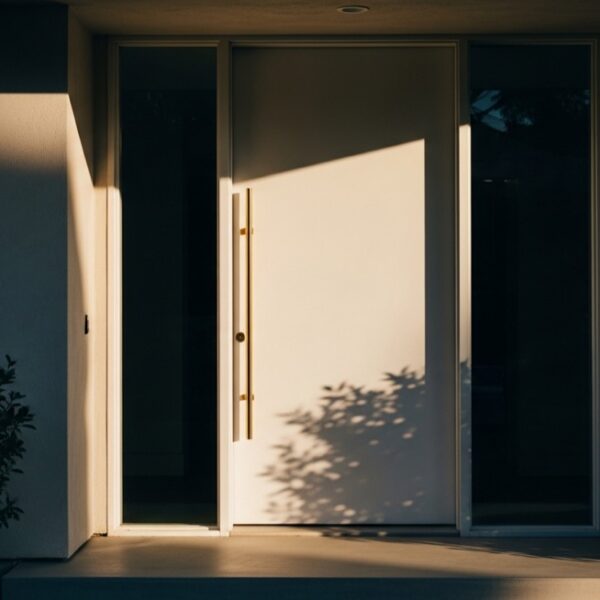
What lasts is the moment you return home at the end of a long day, descend from the canyon road, and push open that heavy, well-balanced door. The outside noise falls away. The light across the plaster wall is soft and warm. The air is still, the materials are honest, and the space welcomes you in.
You are not living in numbers on a page. You are living in a feeling.