
Lifestyle
The clocks fell back on the first of the month, and by a quarter to five the sun is already behind the ridge in Laurel Canyon. That is the whole story of November in Los Angeles. The days are not cold. The afternoons still reach the low seventies, and you can eat lunch outside in a T-shirt. What changes is the evening. It arrives early, it arrives fast, and a house built to open onto a patio suddenly has four more hours of indoors to account for.
Most houses here were designed for the other eight months. Sliding glass walls, concrete floors that stay cool, rooms that face the view rather than the fire. In November they have to do a job they were never really asked to do. The homes that handle it well do a handful of specific things. None of them are complicated.
The heat comes on for the first time
Somewhere in the first week, usually the night after a Santa Ana finishes blowing, the furnace runs for the first time since March. In a lot of houses that means a smell of scorched dust through every vent for twenty minutes. It is harmless, but it is also a reminder that the system has been sitting idle for eight months. Replace the filter before that first night, not after. If the house has a heat pump, which many of the newer builds do, the same rule applies.
Mid-century houses in Pasadena and the hills often still have their original floor furnaces or wall heaters. They work, and they have a certain charm, but they heat one room at a time. People who live with them learn to close doors in November, which is not a habit a Los Angeles house teaches you the rest of the year.
Check before you burn
A wood fire is the thing everyone wants in November, and it comes with a rule most newcomers do not know about. From November 1 through the end of February, the South Coast Air Quality Management District runs its Check Before You Burn program. On days when fine-particulate pollution is forecast to be high, usually the still, cold nights that follow a Santa Ana, wood burning is prohibited across the basin. Gas fireplaces are exempt. The district posts the daily status online and by text alert, and the no-burn days tend to cluster in exactly the weeks you most want a fire.
This is why so many Los Angeles renovations quietly swap wood-burning fireboxes for gas inserts. It is not laziness. It is the difference between a fire you can light on a Tuesday and one you have to check on first. If the house still burns wood, November is also the month to have the chimney inspected. A flue that has not been used since last winter is a flue nobody has looked at since last winter.
The Santa Anas dry everything out
The offshore winds peak in the fall. When they blow, the humidity in the house can drop below twenty percent in a day. Wood floors shrink and click underfoot, picture frames go slightly out of true, and anyone with a piano notices the tuning drift. A humidifier in the main room is not a luxury item in November; it is maintenance. So is a glass of water by the bed.
The winds also carry the fire season into the month. November is historically one of the worst months for wildfire in Southern California, precisely because the winds are strongest and the hillsides have had six months without rain. Houses in the hills and canyons keep their go-bags packed through Thanksgiving, and the sensible ones have already cleared the gutters and the brush before the first red-flag warning.
Light becomes the main event
With the sun gone before dinner, the lighting in a house matters more in November than in any other month. Overhead lighting, the kind most houses rely on, flattens a room and makes a November evening feel like a waiting room. Lamps at eye level and below do the opposite. The warmest practical bulbs are around 2700 kelvin, which is roughly the color of a candle flame or an old incandescent. A room lit by three or four of those feels like a different house from the same room under a ceiling fixture.
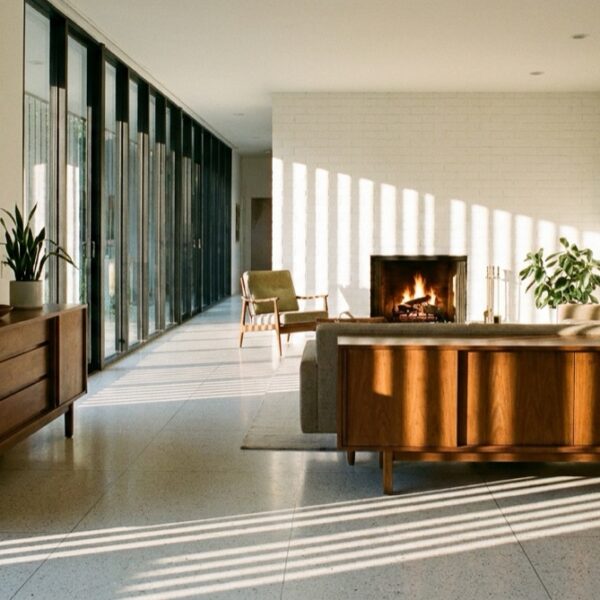
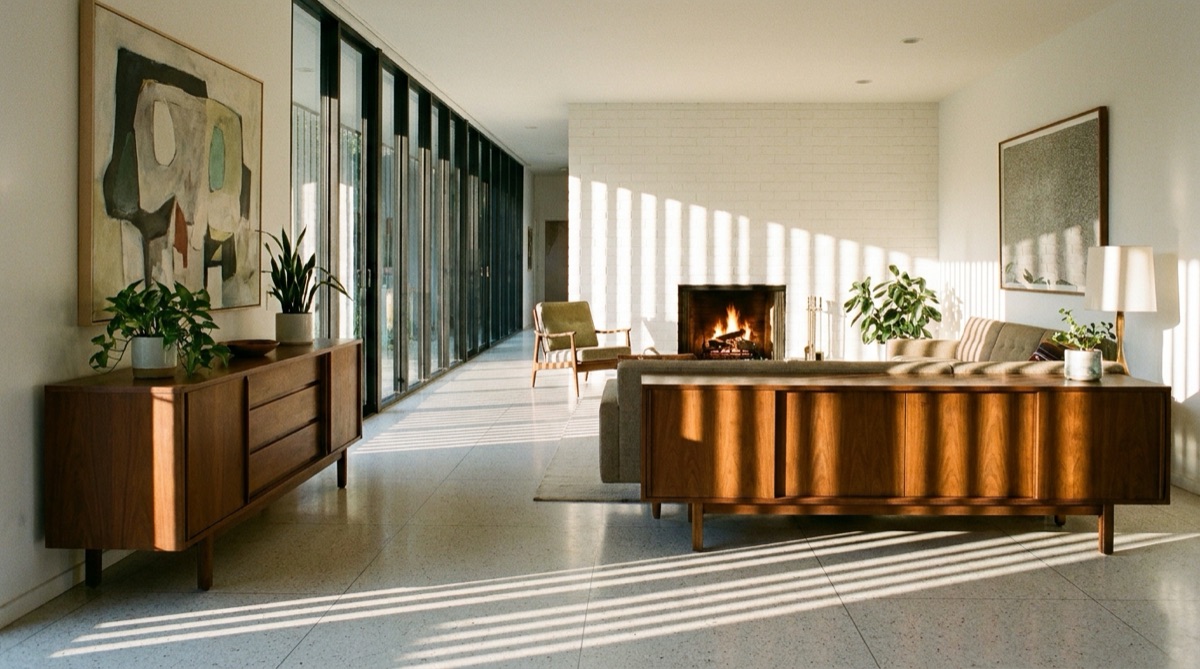
The other November light is the one you did not plan: the low, horizontal sun that comes in sideways through west-facing glass at four in the afternoon. In June it is blocked by the roof overhang. In November it reaches all the way across the floor. Houses with that exposure get an hour of the best light of the year, and it is worth arranging a chair for it.
Floors, windows, and the things summer never tested
Concrete and terrazzo floors are a gift in August and a shock in November. A rug on the floor you actually stand on, in the kitchen and beside the bed, does more for comfort than turning the thermostat up two degrees. The same is true of windows. A great many Los Angeles houses still have single-pane glass, especially the mid-century ones, and a single pane loses heat the moment the sun leaves it. Lined curtains, drawn at dusk, are the old solution and still the best one short of replacing the glass.
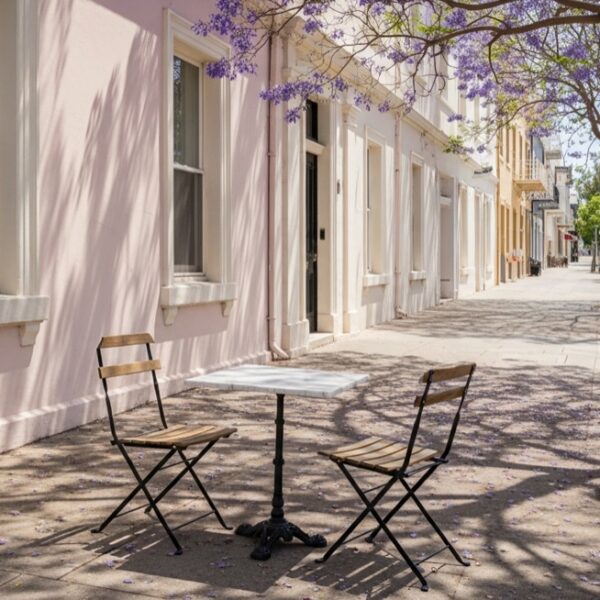
Outside, the patio does not have to close for the season. A single propane heater and a stack of wool blankets will keep a terrace in use through December. Most years the first real rain does not arrive until the back half of November anyway, and the nights before it are some of the clearest of the year.
What the garden does without you
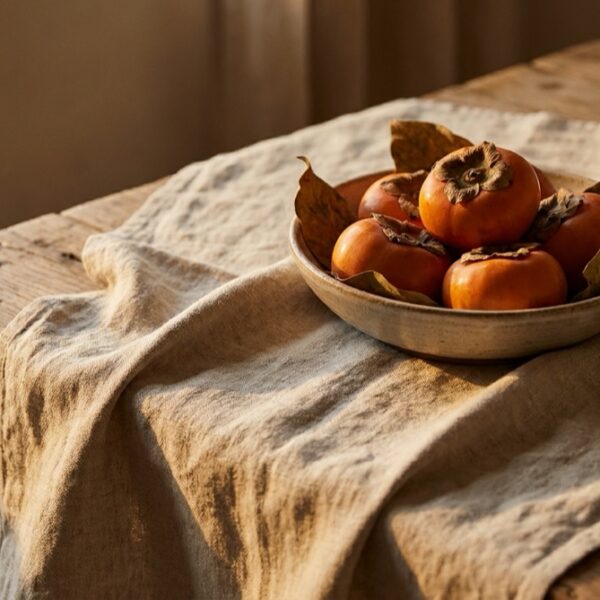
The yard, meanwhile, is quietly busy. Persimmon trees drop every leaf and stand bare with the fruit still hanging on them, bright orange against the brown hills, which is the single most seasonal sight in the city. Navel oranges start coloring up and are ready by the end of the month. Pomegranates split on the tree if nobody picks them. The hillsides are at their driest and brownest, waiting for the rain that will turn them green by January. None of this requires anything from the person who lives there except noticing it.
A house that knows what month it is
None of these are large gestures. A new filter, a chimney inspection, a humidifier, a few lamps, a rug, a curtain drawn at five. Together they are the difference between a house that is merely enduring the short days and one that has adjusted to them. The architecture of Los Angeles will always be about the outside. November is the month that tests whether the inside was thought through as well. The best houses here, old and new, pass that test without anyone noticing there was one.