
Community
From a distance, Los Angeles is often imagined as a city in perpetual motion. We map its life through ribbons of freeway concrete, through deadlines and production schedules, through the persistent hum of ambition under a relentless midday sun. Yet anyone who has lived here through the turn of the seasons knows that in late November, something subtle and profound occurs. The light drops lower in the sky, tilting toward a soft, honeyed amber that softens the edges of the city. The mornings turn cool enough to demand a heavy sweater, and a quiet stillness settles over the hills and valleys.
In the days leading up to Thanksgiving, the city’s vast geography suddenly contracts. The frantic cross-town rush recedes, replaced by an instinct to stay local, to walk rather than drive, and to gather with intention. It is a week where belonging is quietly cultivated—not on grand stages, but along tree-lined sidewalks, across communal market stalls, and around tables pulled together under the open evening sky.
The Subtle Shift in the Light
Autumn in Southern California does not arrive with the dramatic foliage of New England, but its arrival is no less transformative. It is an atmospheric change, marked by long shadows that stretch across residential streets by mid-afternoon and the crisp, unmistakable scent of eucalyptus and woodsmoke mingling in the evening air. The relentless clarity of summer gives way to a softer, more reflective atmosphere.
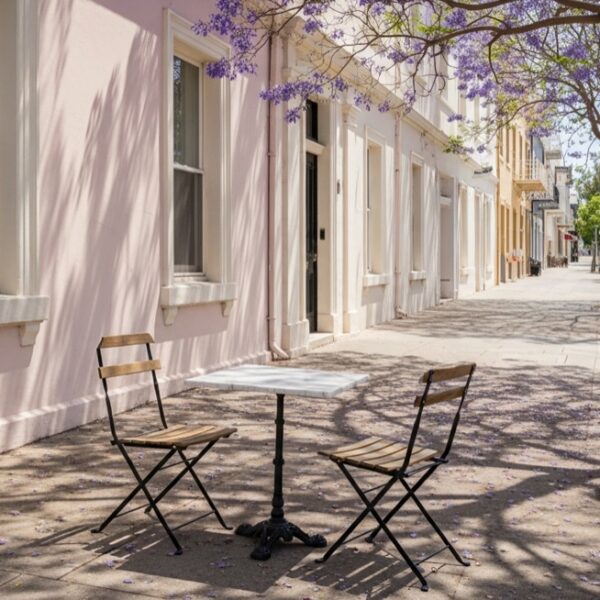
This shift alters how we inhabit our private and communal spaces. In neighborhoods like Pasadena and Los Feliz, where mature canopies of sycamores and camphor trees frame historic architecture, the season manifests as a visual exhale. Leaves turn parchment gold, drifting onto wide parkways and brick garden paths. People begin to linger on their porches and in their front courtyards, stepping outside during the golden hour to greet neighbors walking their dogs. The frantic pace of modern life yields to an unhurried, grounded cadence.
The Living Room of the Neighborhood Market
Perhaps nowhere is this communal pulse more tangible than at the local farmers market during the week of Thanksgiving. Whether on a brisk Thursday morning in South Pasadena or a sunlit Sunday along Larchmont Boulevard, these markets transform into the de facto living rooms of their communities.
They are not merely destinations to purchase ingredients; they are civic rituals. Neighbors who might otherwise exchange hurried waves from their driveways cross paths beside crates of knobby heirloom squash, deep crimson pomegranates, and fragrant bundles of fresh sage. There is a tactile intimacy to the experience—the earthy smell of freshly harvested carrots, the weight of a basket of Fuyu persimmons, the steady, rhythmic greetings shared between growers and long-time patrons.
In an era where modern convenience continually pushes us toward automated transactions and isolated deliveries, the market reclaims the value of presence. It invites us to slow down, to engage our senses, and to acknowledge our neighbors face to face. These small, repeated exchanges form the bedrock of social fabric, reminding us that we belong to a shared place and a shared season.
A Return to the Sidewalk
Los Angeles is frequently mischaracterized as a city without pedestrian life, yet late November proves the opposite. As the afternoon heat dissipates, the sidewalks come alive with a quiet, observant vitality. Walking becomes an intentional pursuit rather than an afterthought.
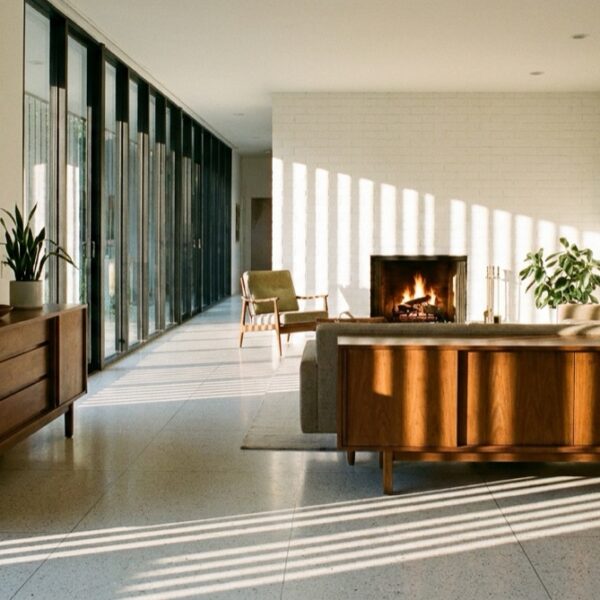
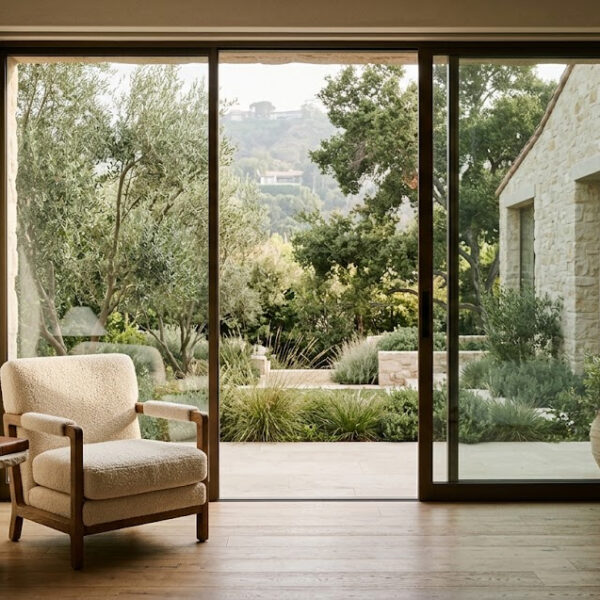
Consider an afternoon walk through the winding lanes of Silver Lake or beneath the tall deodar cedars of Altadena. The architecture itself seems to open up. Mid-century glass walls catch the reflections of the late-autumn garden; Craftsman verandas, with their deep eaves and handcrafted woodwork, offer comfortable vantage points from which to observe the street. Children ride bicycles on quiet cul-de-sacs, and residents pause over garden fences to trade citrus or clippings from overgrown herb patches.
This walkability creates spontaneous connection. It is the counterpoint to the isolated vehicular experience that so often defines the metropolis. On foot, at four miles per hour, we notice the considered details of our environment: the texture of a stone retaining wall, the play of light through an olive branch, the warmth of a neighbor’s kitchen window illuminated against the dusk. We are reminded that a neighborhood is not simply a collection of parcels; it is a tapestry of lives lived in proximity.
The Unhurried Table
When the walk concludes and the afternoon turns to evening, the home takes center stage. In Southern California, seasonal entertaining carries a distinct personality. The mild climate allows for a fluid dialogue between indoors and outdoors, enabling gatherings that feel expansive yet inherently intimate.
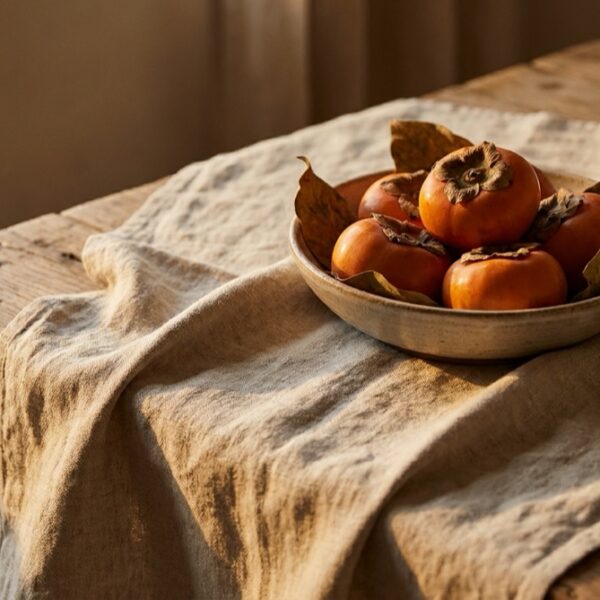
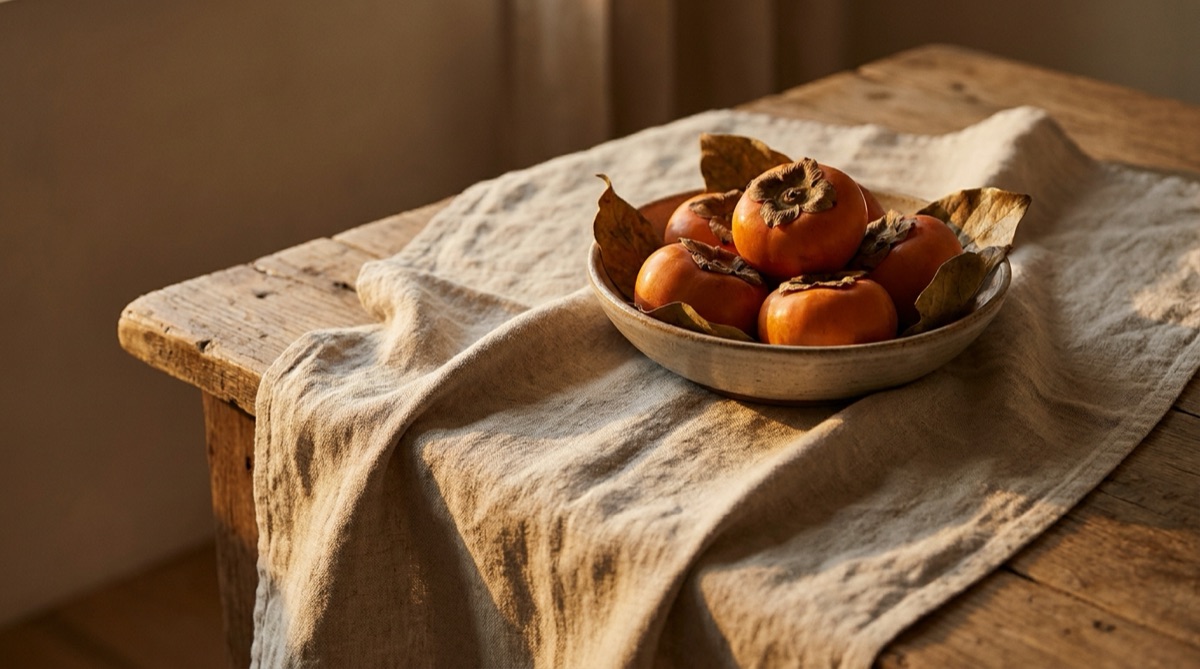
The week around Thanksgiving elevates the dinner table from a functional necessity to an intentional sanctuary. We pull rustic timber tables onto gravel patios or assemble mismatched chairs along an extended dining room terrace. The table is dressed simply, reflecting the natural restraint of the season: heavy unbleached linen runners, hand-thrown ceramics, taper candles whose flames barely flicker in the calm autumn air, and simple arrangements of foraged foliage or persimmons clustered in wooden bowls.
At these tables, conversation takes a different course. The pressures of calendar obligations soften. Friends, extended family, and sometimes newly welcomed neighbors sit elbow-to-elbow, passing warm dishes and pouring wine long into the night. Modern luxury, in this context, is entirely divorced from spectacle. It is found instead in the quality of attention we give to one another, in the ease of shared laughter, and in the restorative power of a prolonged meal.
Micro-Communities and the Architecture of Belonging
Los Angeles is not a single monolith; it is an archipelago of micro-communities, each with its own character, tempo, and history. The beauty of the slower season is that it brings these distinct identities into sharp focus.
Belonging does not happen at the macro level of a metropolitan region; it happens within a radius of three or four blocks. It is fostered by the architecture that shapes our daily interactions—the front porches that face the street, the shared courtyard that invites communal garden care, the low boundary walls that delineate property while inviting conversation. When spaces are designed with this kind of openness, community ceases to be a theoretical concept. It becomes a lived, daily reality.
As cultural commentators and stewards of exceptional properties, The Durkovic Group has long observed that the most refined homes are those that actively facilitate this connection. True luxury is not measured solely in square footage, premium finishes, or panoramic vistas. It is measured in how a home makes you feel—how it shelters you from the friction of the world, how it connects you to the natural rhythms of the seasons, and how naturally it gathers the people you love.
Returning to the Quiet Center
As the holiday week winds down and the city prepares for the bustling momentum of December, a peaceful afterglow lingers. The pantry shelves are stocked with remnants of the harvest; the garden settles into its winter dormancy; and the memory of shared meals remains in the quiet rooms of the home.
In these fleeting late-November days, Los Angeles offers a rare gift: the permission to pause. By leaning into the rhythms of the neighborhood market, the evening walk, and the unhurried table, we discover that the greatest luxury is not something we acquire, but something we create together. It is the simple, grounding realization that we are home, rooted deeply within a place and a community that knows our name.